
| What You Will Learn: This guide explains how solar panel systems work, including the benefits they offer. We’ll review:How solar panel technology worksMain considerations for the installation processCommon misconceptions about solar panels |
Solar energy can be a smart investment for Maryland homeowners. However, the basics of how they work and the benefits they provide should be well understood before installation to make sure the investment will deliver value. Homeowners can reduce their electricity bills by installing solar panels to generate sustainable power and access state incentives. Solar panels can also offset costs by increasing property value and helping utility providers meet sustainability goals.
This article highlights the basics of solar panel operation and installation, as well as common misconceptions, to help homeowners in Maryland choose a reliable installer and make an informed decision on their solar investment.
How Do Solar Panels Work?
At their most basic level, solar panels capture sunlight and convert it into electricity using photovoltaic (PV) cells. The power is direct current (DC), so an inverter is needed to convert it to alternating current (AC) power, which powers homes and appliances. However, different types of solar panels can impact the cost and power generation efficiency that homeowners can expect.
All solar panels are made of silicon, but silicon cells come in three variants, each with its own pros and cons, including: monocrystalline, polycrystalline, and thin-film. This chart summarizes the differences between the panels:
| Type of PV cell | Performance | Cost | Portability |
| Monocrystalline | Highest | Highest | Mid |
| Polycrystalline | Mid | Mid | Lowest |
| Thin-film | Lowest | Lowest | Highest |
The right solar panel may be different for each property, based on the installer’s assessment of the roof and the owner’s budget. For example, properties with distinct roof structures or limited roof access may save even more on installation by choosing thin-film panels, which are the lightest option.
Note: Many homeowners in Maryland wonder whether winter clouds and cold weather will reduce the value of their solar panel investment or shift their breakeven timeline. Though shade can affect solar panel output, PV cells operate more efficiently in cold temperatures. Good sun coverage and the right orientation have a greater impact on solar panel efficiency than Maryland’s winter season.
What to Expect During a Solar Panel Installation
To help property owners prepare for their solar system installation, these steps show how the process works and highlight common misconceptions about choosing a solar panel solution:
- Solar Site Assessment: Before the installation process begins, solar panel providers conduct an on-site solar assessment to determine the best type, location, and orientation for the property’s new solar panel array.
Note: Some solar panel installers provide instant price assessments on solar panels to help homeowners make an informed decision.
- Solar Proposal: Based on the property’s location, shade coverage, roof orientation, building age, and more, the installer will create a detailed solar proposal that includes the planned orientation, PV type, size, installation cost, and energy savings projection.
- Financing Review: Before the installation process begins, property owners select a financing option. Solar panels can be financed as a solar lease, loan, or cash purchase. A lease differs in that the homeowner doesn’t own the installation until it’s paid off, so they can’t take advantage of state incentives, such as the Solar Renewable Energy Credit (SREC) market. Both solar loans and cash purchases give homeowners the flexibility to own the system and take advantage of its incentives.
- Permit and Approval Process: Experienced installers handle building permits, utility interconnection approval, homeowners association approval (when applicable), and other applications.
- Equipment Delivery and Preparation: Before equipment delivery, a roof inspection helps the installer determine whether the roof can support the weight of the solar panels in their planned position. Roof repairs may be needed before installation begins.
- Setup, Inspection, and Activation: The installation will be securely mounted to the roof, positioned, and wired. Battery storage, if applicable, will be installed in this step as well. The system will be inspected to make sure it meets local building codes. The utility company may perform a final review.
Common Misconceptions: Many homeowners assume that the installation process will take weeks. However, the actual mounting, positioning, and activation of the system is usually completed in a few days. Another common misconception is that solar panels eliminate 100% of the property’s energy bill. In reality, the home’s energy needs, the solar panels’ energy production, local utility rates, and net metering laws affect the percentage of the home’s power generated by the new solar installation.
Partner With Experienced Installers to Learn More About Solar Installations in Maryland
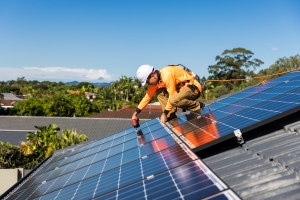
At Energy Select, our experienced team of solar installers conducts thorough on-site assessments and inspections to make sure homeowners know how solar panels will work in their situation, including their financial impact. We offer a same-day price assessment to maintain transparency and give homeowners more resources to make their decision.
Contact our team today to learn how a solar panel installation can improve the sustainability, financial performance, and value of your Maryland home.