
| In This Article: We review the current state of solar power in Maryland to help homeowners realistically save on their monthly and long-term energy bills, take advantage of incentives, and use net metering to earn credits for excess energy generated by their solar installations. |
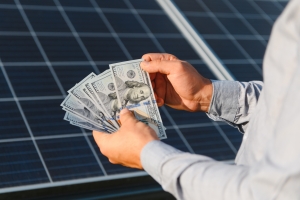
Solar panels offer homeowners in Maryland an opportunity to save money on their monthly power bills, which have increased in recent months for many households. Major providers, including PEPCO, BGE, and Potomac Edison, have planned rate increases to roll out in the coming months to keep pace with infrastructure costs and inflation. This puts pressure on homeowners to find an alternative power source that delivers energy savings, access to state incentives, and energy independence.
The State of Residential Energy Prices in Maryland
For many Maryland homeowners, monthly energy costs remain a mystery until they open their bills and learn what new distribution costs, base costs, or supply charges they will need to pay this month. For example, homeowners experienced widespread utility rate increases in Fall 2025 due to capacity market needs.
The capacity market is a system by which the state pays utility providers for future power generation by auctioning power based on the region’s needs. The auction system creates a balance between energy costs and power reliability by encouraging competition.
However, in 2026, the capacity market is contributing to rising utility costs in Maryland because two major power plants in the Baltimore area were left out of the auction. This has resulted in an undervaluation that may impact costs until 2027. Additionally, data centers are drawing more power than ever before, leading to more aggressive power forecasts.
Regardless of the market conditions driving price increases, homeowners in Maryland are paying more for residential power and seeking ways to save.
Note: An “energy market” is an agreement on a price per unit of power generation (watts), while a “capacity market” is an agreement on future power generation.
How Much Are Maryland Homeowners Paying for Electricity?
Recent data shows that Maryland homeowners pay an average of $0.2061 per kWh for their residential electricity, as of January 2026, which is higher than the national average ($0.1745). Even compared to Maryland’s prices in January 2025 ($0.1824), this represents a 13% increase in the average cost. This trend will likely continue to accelerate as market conditions and inflation force utility providers to offset rising costs by passing them to homeowners.
As the average Maryland homeowner watches their electricity bill climb, solar power offers a potential alternative, providing access to more sustainable energy and state incentives without relying on the grid.
Benefits of Residential Solar Panels in Maryland
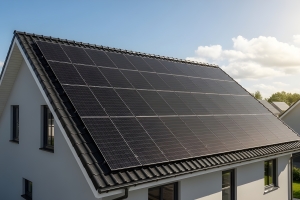
The first thing that many Maryland homeowners wonder when they begin their solar panel search is how much money they can save per month. Properly installed solar panels will save an average Maryland homeowner over $72,000 over 25 years. However, the average system costs around $37,000 to install, before incentives are factored in.
This means the typical solar panel installation has a payback period of just under 10 years. This is the time it will take for the initial investment to be paid off and for the solar panel to be generating electricity without additional cost beyond maintenance. This is the baseline repayment schedule for the average system, but state incentives can shorten this timeline.
Maryland Solar Access Program (MSAP)
The Maryland Solar Access Program is a state-level grant program that helps Maryland homeowners save money on solar panel installation costs. Eligible grant recipients can reduce their payback timeline using these funds, but only if they act quickly. As of April 6, 2026, 94% of MSAP funding has already been requested for FY26.
The MSAP replaced other now-discontinued state incentives, allowing homeowners with eligible solar installations to accelerate their payback timeline and get off the grid. As the program will likely continue in FY27, homeowners planning residential solar arrays in the coming year should review the eligibility requirements and get started early to improve their application’s chances of approval.
Net Metering and Solar Renewable Energy Credits (SRECs)
Solar power systems often generate power that homeowners do not need at the time. Net metering credits the system owner for the extra electricity they add to the utility provider’s grid. This sustainable power helps utility providers meet the Renewable Portfolio Standard (RPS), which requires them to increase their proportion of renewable power over time.
This extra power is credited back to the homeowner as a Solar Renewable Energy Credit (SREC), which a solar broker then sells on a dedicated market. Maryland is one of fewer than 10 states and territories with a dedicated solar carve-out, which gives Maryland homeowners the opportunity to reduce their electric bills even further and shorten the payback period on their solar panels.
Local Solar Providers Maximize Solar Savings in Maryland
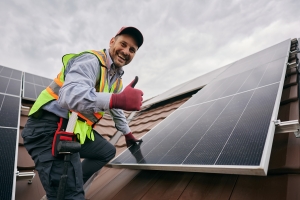
At Energy Select, our team of local installers conducts on-site assessments to figure out the best installation for your property. We provide same-day solar financial quotes to help you accurately plan your payback timeline and save on your monthly bills as soon as possible.
Contact our team and schedule a solar assessment today to learn how much money you could save on your monthly power bills by switching to solar energy.