As most Maryland home and building owners know, energy prices have increased steadily over the last few years, with residential energy prices alone increasing 44% between 2020 and 2025. Due to inflation, rising infrastructure and material costs, and other factors, these prices will likely continue to increase, making it more important than ever for property and building owners to prepare.
Many Maryland homeowners and commercial building owners are reviewing their energy needs and switching to solar installations to start saving as soon as possible. However, switching to solar can be a confusing process, involving complex energy production estimates, cost factors, and compliance changes.
Covered in This Blog:
This article covers the process professional solar installers use to conduct energy production estimates. The goal is to help property and building owners make informed, cost-saving decisions about their clean energy investments.
The Impact of Energy Cost Increases in Maryland
Prices for many major providers, such as BGE, Potomac, SMECO, and Pepco, have either begun rising to cover infrastructure and inflation costs or have set a planned increase schedule for next year. For these major providers, refer to this table to learn when these increases will start:
| Energy Provider | Energy Price Increase Date |
| BGE | Fall 2025 – Spring 2026 |
| SMECO | June, 2026 |
| Pepco/Delmarva | August 2026 |
| Potomac Edison | October 2026 |
*Visit the Office of People’s Council(OPC) for the State of Maryland to learn more.
These increases will lead to tighter margins for commercial installations and added strain on residential homeowners’ budgets. While planned rate increases are unavoidable, property owners can prepare by reducing their reliance on the grid. Solar installations provide an alternative source of energy that can lessen the impact of rate increases on individual properties and buildings, provided owners can recognize how they will impact their energy needs.
Note: Each solar installation and building is different in terms of how it generates and retains energy. Solar arrays are not a one-size-fits-all solution to the energy crisis in Maryland. They are simply one part of improving the energy strategy moving forward.
What is an Energy Production Estimate?
Solar companies conduct energy production estimates to determine how much power the proposed array will produce for the home or business, accounting for various factors. The estimates help owners put their solar investment into context, including the amount of time they will need to break even.
Energy production estimates are usually broken into six parts, which help owners interpret their results with confidence. These include:
Shade
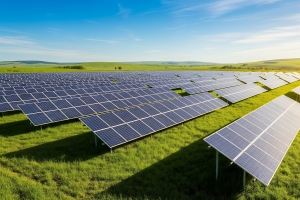
Shade levels impact energy production. Depending on the level of shade and, therefore, the level of sun exposure, the array will be more or less efficient at converting sunlight into usable power. Seasonal changes will also be considered. For example, if the production estimate is conducted in the winter, certain trees may regain their leaves in other seasons, creating more shade at certain times of year.
Next Steps: Consider trimming or removing trees that may impact your power production. If the trees are on public or other private property, the shade may affect your break-even calculations.
Orientation
The system’s orientation will be assessed as part of the energy production estimate. The power output will vary with sunlight exposure, which in Maryland can be maximized by a South-facing solar panel array. East and West-facing panels can still generate power, but they may be less efficient.
Next Steps: Solar companies include assessments of the most efficient solar panel orientation, but this may not always be feasible, depending on the roof’s shape and structure. Owners can ask about adapting the system to maximize their sun exposure, which may require a modular design or a roof modification.
Tilt
Solar arrays are tilted to catch more sunlight. Depending on the location, the tilt angle will affect the system’s efficiency. The optimal tilt is usually between 30 and 45 degrees, but the energy production estimate will include recommendations based on the location and roof structure.
Size
Systems of different sizes generate different amounts of power. However, bigger is not always better when it comes to solar arrays. Extra power generation can be stored in a battery backup. Still, the cost of buying, installing, and maintaining a system that is significantly larger than the home or commercial building’s needs is usually not cost-effective. In certain cases, it may not comply with Maryland’s net metering laws.
Pro Tip: Net metering laws in Maryland, including system size and energy production limits, can affect energy estimates. According to the latest legislation, systems in Maryland can generate up to 200% of the customer’s annual electricity needs.
Equipment
Solar installations can be made of different materials, including inverter types, optimizers, and batteries. Each type corresponds to different cost, maintenance, and energy production factors. The energy production estimate may clarify the different production levels achievable with other materials and configurations.
Example: Solar panels are usually made from one of three material types: monocrystalline silicon, polycrystalline silicon, or thin-film materials. While thin-film materials have the lowest power efficiency, they are the thinnest and most lightweight. Monocrystalline silicon costs more but produces power more efficiently.
Location
In different locations, solar installations will have different levels of power efficiency. With more hours of direct sunlight, solar panels in specific locations can break even more quickly.
Local Solar Companies Can Help Make Solar Assessments Easy
Solar energy production estimates may seem complicated at first, but property and business owners should know that these estimates exist to make their lives easier. At Energy Select, our team uses energy production estimates to communicate benefits, personalize the solar array to the building’s needs, and create a financial game plan that helps owners feel their investment is in good hands.
Our goal is to offer instant solar assessments that complement our in-depth estimates of energy production. Contact our team to schedule a consultation and learn how your solar array can be personalized to your building’s needs and limitations.