Air conditioning in a Maryland summer (and heat during the winter) can push electric bills high enough that many consumers are asking themselves about energy alternatives. This quickly leads them to consider solar services.
But with the end of the federal solar tax credit in 2025, you may be asking if solar still makes financial sense for you. To help answer that question, we look at the cost of solar panels in Maryland today, which solar incentives are still available in the state, and how to tell whether the numbers work for your specific home.
What Solar Panels Cost in Maryland Right Now
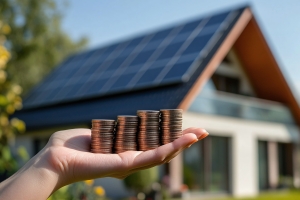
Statewide data from Energy Sage puts the average Maryland solar panel installation cost at $2.59 per watt as of August 2026, before any incentives are applied. The average system size in the state is about 13.5 kilowatts, which works out to roughly $38,844 before incentives, though homeowners commonly see quotes ranging from about $29,500 to $40,000 depending on the system.
How much an installation would cost for your home will depend on a number of factors, including:
- The type of panel you choose. High-efficiency panels built for smaller or shaded roofs cost more than standard panels.
- The brands you select. Some solar panel brands are more expensive than others, and there are also different brands of inverters and other components to consider.
- Installation complexity, including the pitch of the roof. A simple, single-pitch, south-facing roof costs less to install on than a roof with multiple angles or obstructions.
- The age of the electrical panel. An older panel may need to be upgraded before solar can be installed.
You should also consider ongoing costs. While usually any single ongoing cost is relatively minor, they can add up over time. Most Maryland systems need little maintenance beyond occasional panel cleaning and monitoring. However, inverters typically carry a shorter warranty than panels and may need replacement sooner, which is a cost worth factoring into your long-term math.
To understand exactly what an installation may cost for your home, you’ll need a site visit and customized proposal.
What Changed With the Federal Tax Credit

For more than a decade, the Residential Clean Energy Credit under Section 25D of the federal tax code let homeowners deduct 30 percent of their solar installation cost from their federal taxes. That changed with the One Big Beautiful Bill signed into law in July 2025. It terminated the credit for any installation not completed by December 31, 2025. This means that for a Maryland homeowner installing solar in 2026 or later, that 30 percent federal deduction is no longer available.
This is a real change, and it affects the payback period on a solar system. A system that once cost roughly $24,000 after the federal credit now costs the full $34,000 or so before any other incentive is applied.
However, other incentives are still available for Maryland homeowners, and planning an installation to take advantage of them can have a real impact on the total cost of the system.
What Maryland Incentives and Financing Are Still Available
While the federal credit is gone, Maryland still has incentives that reduce the cost of a solar installation. Your Energy Advisor can walk through which financing option, or combination of options, fits your household’s actual needs.
Tax Incentives
Solar equipment is exempt from Maryland’s 6% sales and use tax, and the Maryland Department of Assessments and Taxation offers a property tax exemption on the added home value a solar system creates, so installing panels will not increase your property tax bill.
Net Metering
Through SMECO and Maryland’s other regulated utilities, homeowners currently receive a full retail-rate credit for excess electricity their system sends back to the grid, which shows up as a credit on future bills.
Maryland lawmakers passed legislation in 2026 that will replace this one-to-one credit structure with a new compensation framework starting in mid-2027, so the value of net metering for a system installed today may look different a year from now, although existing users are grandfathered in. That timing is worth discussing with your Energy Advisor before you finalize a system size.
Financing
Solar financing in Maryland is often where homeowners see the biggest swing in their final cost. Energy Select Home Energy Improvement Program, run in partnership with SMECO, connects homeowners to rebates that may reduce the upfront cost of energy upgrades.
The BeSMART Energy Efficiency Loan currently offers up to $30,000 at a fixed 6.99 percent APR over a term of up to ten years for homeowners with a credit score of 640 or higher, and it can finance solar equipment when paired with qualifying efficiency measures.
The Clean Energy Advantage Loan offers zero percent financing for the first 24 months on qualifying HVAC, insulation, and weatherization projects, which is often the right fit for homeowners tackling efficiency upgrades alongside or ahead of a solar installation.
Why Two Homes on the Same Street Have Different Solar Economics
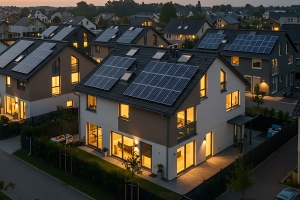
Many factors influence the economics of solar panels. To start, system sizing depends on actual usage, not roof size alone. A household using 900 kilowatt-hours a month and one using 1,600 kilowatt-hours a month need different system sizes, which immediately affects the cost.
Orientation and shading are also important factors. A south-facing roof with no tree cover will produce meaningfully more electricity per panel than a roof in partial shade that faces east or west, even if both roofs are the same size. That difference changes the payback period without changing anything about the equipment itself.
This is also why the instant online estimate tools many solar companies use produce numbers that rarely hold up. Those tools rely on satellite roof measurements and average usage assumptions. They cannot see your shading, your roof’s actual condition, or your household’s real electricity usage, all of which change the final number and your eventual savings.
Online tools can be a valuable first step, but discussing your options with an Energy Advisor will give numbers that better reflect your usage and needs.
How to Read a Solar Proposal Like an Energy Advisor
When you compare proposals to install solar systems, have each company show its work. Ask why they landed on a particular system size for your usage and what annual production they expect based on your roof’s actual orientation. Get full financing terms in writing and ask what payback period those specific numbers produce.
Contact Energy Select today to talk with a dedicated local Energy Advisor, not an outsourced team, who will build a proposal around your home’s energy usage and roof geometry, with financing options tailored to your needs and future energy consumption. We’ll review your electric bill, assess your roof’s orientation, and walk through the financing options in Maryland that apply to your household.
You can also get an Instant Estimate today to see what a system built for your home would actually cost.