

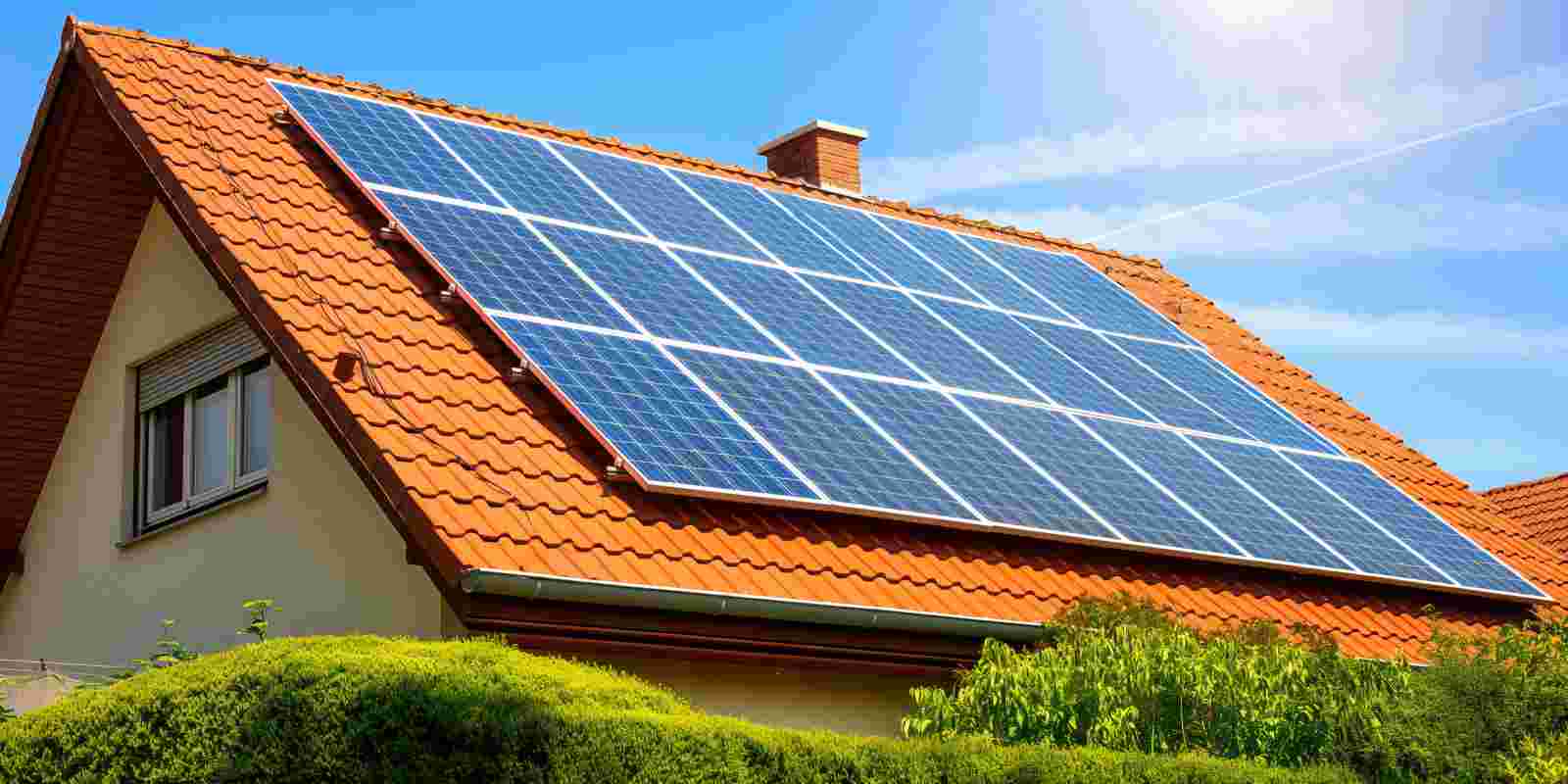
When someone prices the cost of a solar panel installation, they often expect it to work like buying an appliance. A bigger unit comes at a bigger price, and every dealer sells more or less the same product. Solar doesn’t price that way. There are more and less efficient models to accommodate different sites, and much more goes into a solar installation than the panels.
Your Usage Sets the System Size
Capacity determines much of the cost of a solar panel installation. A home that needs more capacity is likely going to have a more expensive system. For example, two homes in the same neighborhood with similar roof lines can need very different solar systems if one runs a heat pump, well pump, and an electric vehicle (EV) charger, while the other has gas heat and doesn’t own a car.
To estimate the size of a system that your home needs, early consultations with an installer will look at your past 12 months of electric bills.
System size can also change what you pay to connect to the grid. Southern Maryland Electric Cooperative (SMECO), for example, reviews most residential systems of 20 kW or less as Level One applications at no charge, while Level Two and Level Three applications carry a $260 fee and Level Four applications run $950. If the interconnection requires a utility-side upgrade, that cost is passed through to the customer.
Oversizing carries a cost penalty that is easy to miss. Kilowatt-hours you offset directly against your own consumption are worth full retail value to you; you aren’t paying the electric company for power you generate. Kilowatt-hours in excess of what you use are often not paid out at full price. SMECO, for example, pays out in April each year and in 2026 reported an average credit of $58.79.
In other words, generating power in excess of what you use and cashing credits out is paying full price for a discounted return.
Where Equipment Choices Move the Price
On a wide south-facing roof that has room to spare, the premium solar panels are rarely necessary. On smaller roofs, area becomes a limiting factor that can be offset with more expensive, higher-efficiency modules.
Inverters are the bigger decision. A single string inverter costs less and works fine on one clean, unshaded plane. Microinverters and panel-level optimizers cost more upfront but give you production data panel by panel and handle partial shading and multiple roof planes better. That describes many Maryland colonials that have dormers and mature tree cover.
Inverters can have a shorter service life than solar panels, so budget for replacing one or more partway through the system’s life.
Adding battery storage is a step change in cost and widens the electrical scope of the job. Storage may add a second power system with its own enclosure, a hybrid or battery-specific inverter, and a separate subpanel wired so the circuits you want backed up can disconnect from the grid and run on stored power when utility service drops.
Maryland’s Residential and Commercial Energy Storage program is designed to help energy customers offset the cost of storage systems, but funding requests often exceed the program’s yearly budget. The program stated it would begin accepting requests for fiscal 2027 in the summer of 2026.
Roof Condition, Panel Age, and Permitting
Asphalt shingle is the baseline for pricing the labor of installing the modules. Standing seam metal can lower the installation cost, since racking clamps to the seams and never penetrates the roof. Slate, cedar shake, and tile push labor up sharply. Steep pitch slows crews and makes fall protection a greater concern.
Roof age should also be taken into account. If your shingles are already 15 years old, mounting an array over them means paying to pull that array off and reset it when the roof is replaced. Doing the roof first almost always costs less.
Complexity can also add cost. A roof broken into five small planes by dormers, vents, and plumbing stacks needs more racking runs and more crew hours per watt than one unbroken plane of the same area.
The electrical panel, especially in the older homes that make up much of the housing stock in Southern and Western Maryland, is also a consideration. Many still run a 100-amp service that may require an upgrade to support solar.
Permitting changes by county. St. Mary’s, Calvert, Charles, and Allegany each set their own fee schedules, plan review timelines, and inspection sequences. Homeowners association architectural review or historic district approval also adds time and administrative hours.
Federal and State Incentive Programs
The federal Residential Clean Energy Credit under Section 25D of the U.S. Tax Code was terminated for expenditures made after Dec. 31, 2025, by H.R. 1 of the 119th Congress at Section 70506. The statute treats an expenditure as made when the original installation is completed, so a system finishing installation in 2026 or later does not qualify for the 30% federal credit.
Maryland still offers incentives, though some have a budget that is quickly reached with applications, and so the programs aren’t always open.
First, solar energy equipment is exempt from Maryland sales tax, and solar energy property is exempt from state and local property tax. This means adding a system does not raise your property tax bill.
The Maryland Solar Access Program provides $750 per kW up to $7,500 for income-eligible households working with a participating contractor, with the 2027 fiscal year application window running from July 29, 2026 through May 31, 2027.
Maryland’s Solar Renewable Energy Certificate market lets owners sell one certificate per megawatt-hour produced, and net metering provides credits for excess generation.
Get a Number Built for Your Home

At Energy Select, we know energy. Founded in Southern Maryland and with an office in Western Maryland, we are a fully insured energy solutions provider. We specialize in energy-saving and energy-generating solutions designed to maximize your returns. Contact us today to schedule a consultation or request a quote.
For solar projects, you can also get an instant estimate through our online portal.