


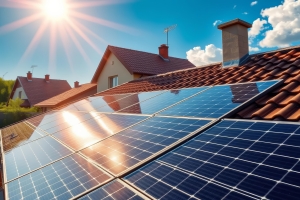
Solar panels can increase your Maryland home’s appraised value, particularly when you own the system and comparable home sales support an adjustment. However, the amount an appraiser recognizes may differ substantially from what you paid for installation. Homeowners preparing to sell, refinance, or apply for a home equity line of credit (HELOC) should understand how ownership arrangements and appraisal guidelines affect their property’s valuation.
Solar Panels Increase Home Value
An appraiser’s ability to count solar panels depends heavily on who owns the equipment and whether another lender holds a security interest in it. Fannie Mae’s November 2024 guidance distinguishes several ownership arrangements, each with different appraisal requirements.
Homeowner-Owned Solar Panels
Panels purchased outright generally qualify for consideration as part of the property’s appraised value. Systems financed through unsecured loans or loans that have been paid off may receive similar treatment. Ownership alone doesn’t establish a specific dollar amount. Local real estate conditions remain central to the appraisal process, requiring professionals to assess whether buyers are willing to pay a premium for the installed system.
Financed Solar Panels
Financing arrangements require closer examination. Fannie Mae permits appraisers to recognize financed panels as real estate fixtures when the equipment cannot be repossessed following a financing default.
Panels classified as personal property and pledged as collateral for separate debt cannot contribute to the appraised value under those guidelines. Lenders may review financing agreements and Uniform Commercial Code (UCC) filings to establish the system’s legal status.
Leased Solar Panels and Power Purchase Agreements
Third-party-owned equipment receives different treatment. Under Fannie Mae’s appraisal guidelines, appraisers cannot include the value of leased solar panels or systems covered by power purchase agreements (PPAs). Homeowners planning to sell should review their agreements for transfer requirements and buyer obligations.
How Appraisers Calculate Solar Panel Value
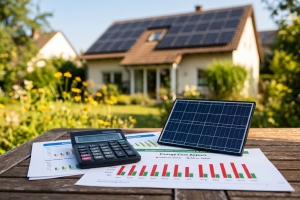
Appraisers primarily use comparable property sales to determine how much a solar panel installation contributes to home value in Maryland. For example, an appraiser evaluating a solar-equipped home in Southern Maryland might examine recent sales of similar properties with and without homeowner-owned systems. Differences in sale prices can provide evidence of what buyers will pay for solar.
System age, capacity, condition, and electricity production can affect the analysis. A newer installation producing substantial electricity may receive different treatment than an aging system approaching inverter replacement.
Fannie Mae’s appraisal guidance also recognizes income-based and cost-based approaches to supplement comparable sales analysis. Appraisers may use tools such as Sandia National Laboratories’ PV Value tool to estimate a system’s value based on projected electricity production and financial benefits.
However, appraisers cannot simply add installation expenses dollar for dollar or rely exclusively on projected electricity savings. Limited solar comparable sales can make a precise adjustment harder to support, even when the system reduces household energy expenses.
What Research Reveals About Solar Panel Resale Value
Historical studies provide evidence that solar-equipped homes have earned higher selling prices. A 2015 Lawrence Berkeley National Laboratory study examining approximately 22,000 home sales across eight states found solar premiums averaging roughly $4 per watt, or approximately $15,000 for a typical system.
Researchers also observed that premiums declined as installations aged. In a separate examination of residential property sales, Zillow documented a measurable price difference associated with solar installations, finding that advertised solar homes sold for an average of 4.1% more nationally in its 2019 analysis.
Neither figure establishes a guaranteed premium for Maryland properties today. Actual solar panel resale value reflects local buyer demand, equipment characteristics, and the evidence available to the appraiser.
Preparing for a Solar Panel Appraisal in Maryland
Accurate documentation gives appraisers the information they need to evaluate your installation. The Appraisal Institute’s Residential Green and Energy Efficient Addendum guide identifies technical details that support the evaluation of energy-efficient property features.
Gather the following before listing your home or scheduling a solar panel appraisal:
- Ownership and financing records. Provide purchase agreements, loan documents, or proof of repayment to clarify whether the panels qualify for valuation.
- Installation documentation. Include permits, final inspection approvals, installation dates, system capacity, and equipment specifications.
- Production history. Download annual electricity generation reports from your monitoring platform.
- Warranty and maintenance records. Supply equipment warranties, inverter information, and service documentation that establish the system’s condition.
Homeowners selling a house with solar panels should also work with their real estate agents to accurately complete applicable Multiple Listing Service (MLS) solar fields. The Council of Multiple Listing Services (CMLS) guidance addresses solar ownership classifications and production information used in property listings.
Correct ownership and production details help appraisers identify relevant comparable properties. For refinancing with solar panels, submit ownership and financing documentation to your lender early enough to resolve questions about equipment collateral.
Discuss Your Solar Investment with Energy Select

Homeowners evaluating residential solar panels should examine expected electricity savings alongside ownership terms and long-term property plans. A system’s potential contribution to home value deserves attention, even though an independent appraiser determines the final adjustment.
Energy Select helps Southern and Western Maryland homeowners evaluate solar options based on household electricity usage and future energy needs. Our team can explain ownership choices and system performance expectations before installation. Get an instant estimate to discuss a solar investment that supports your home’s energy goals.