

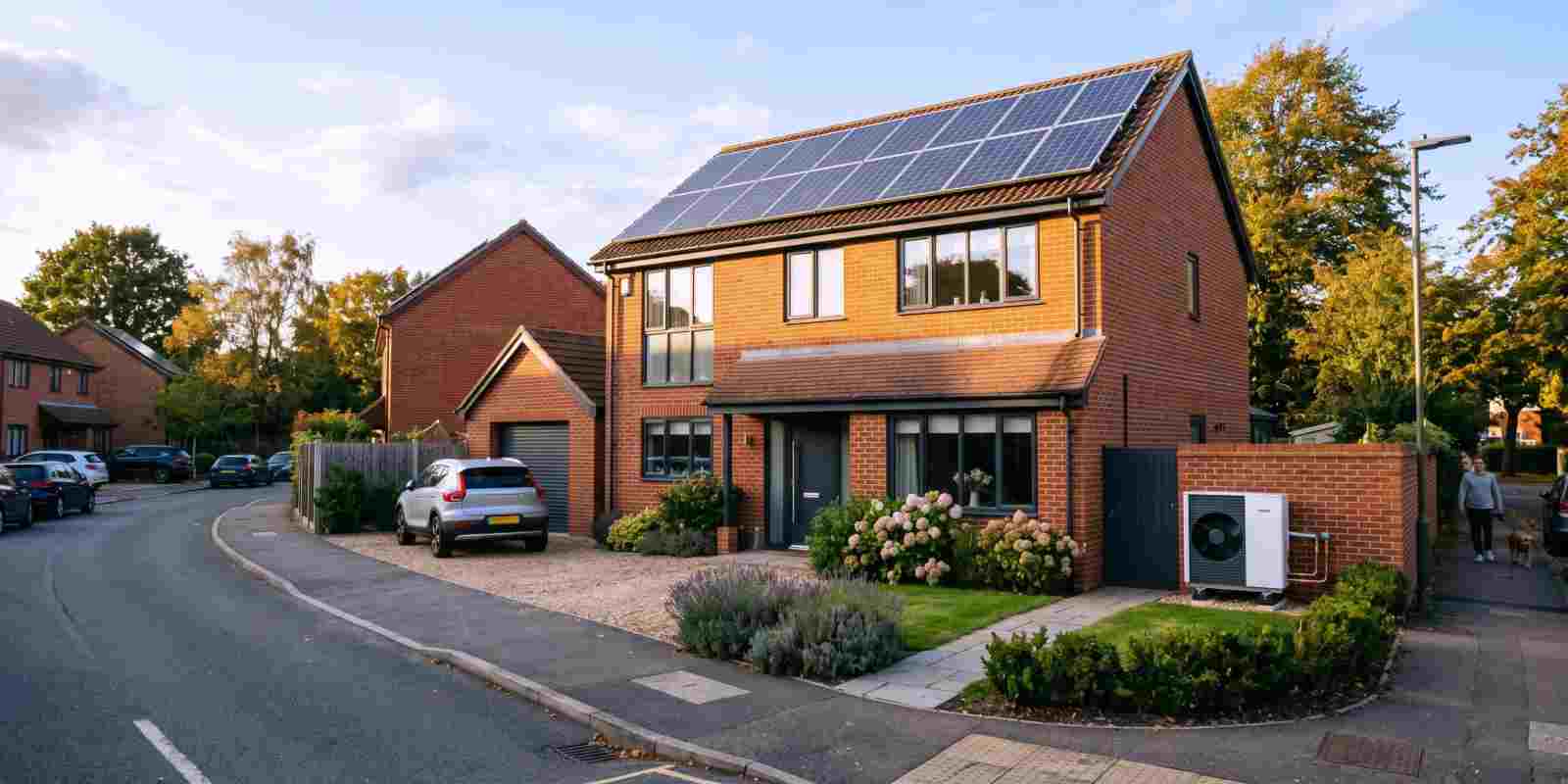

Maryland homeowners who install solar panels should update their homeowners insurance as soon as the installation is complete. Your agent needs to confirm how the policy classifies the array, whether your limit covers replacing it, and who insures a leased system.
Rooftop Panels Are Usually Covered as Part of the House
Most insurers treat a roof-mounted array as part of the house and include it in the dwelling portion of the policy. Home insurance usually covers solar panels when you own the system and the damage results from a covered event, such as a fire or a tree limb falling on the roof.
Read the perils section of your policy before assuming the array is protected. Many insurers exclude damage caused by improper installation or normal wear, and some also exclude wind and hail. The Maryland Energy Administration recommends notifying your insurer once the installation is complete. Your agent will then confirm whether your current policy covers the system or whether you need a separate rider.
Raise Dwelling Coverage to Account for the System’s Replacement Value
To get full solar panel dwelling coverage, set your dwelling limit high enough to rebuild the house and replace the array after a total loss. If it’s too low, your insurer pays only up to that amount, and you pay the rest.
If you set your dwelling limit several years ago, ask your agent to recheck it against current construction costs. You will need to factor in the full price from your final residential solar contract, including any battery backup or electrical panel upgrade completed during the project.
Insurers settle claims on solar equipment at either replacement cost or actual cash value. With actual cash value, depreciation comes out of the payment, so on a seven-year-old array you could receive far less than the cost of new panels and labor. Solar panel replacement value coverage pays for comparable new equipment.
Ground-Mounted Arrays May Fall Under a Smaller Limit
Panels on a ground mount, a pole barn, or a detached garage usually fall under the policy’s other structures coverage. Insurers typically cap that category at 10% of your dwelling limit by default. For a home insured for $600,000, that means $60,000 for the array and all other outbuildings combined.
Many farm and acreage properties in Southern and Western Maryland already have barns, sheds, and equipment buildings that count toward that same limit. On these properties, insuring solar panels in Maryland usually means raising the other structures limit or listing the array separately.
Questions to Settle With Your Agent

Most questions about solar panels and home insurance in Maryland can be settled in a short call with your agent. Ask for the answers by email or as a written endorsement to the policy. If a claim is disputed later, the email gives you a record of what you were told.
- Does the policy pay replacement cost or actual cash value on the panels, inverters, and racking? Ask about each component by name so that the answer covers the whole system.
- Does a roof claim include the cost of removing and reinstalling the array? Storm damage under the panels can’t be repaired until they come down, and the Maryland Energy Administration says removal and reinstallation may cost 20% or more of the original installation.
- Is there a separate wind, hail, or named-storm deductible, and how is it calculated? If it’s a percentage of the dwelling limit, raising that limit for solar also raises your out-of-pocket cost on a storm claim.
Leased and Financed Systems Split the Responsibility Differently
With a lease or power purchase agreement, the solar company owns the panels on your roof and may be responsible for protecting them against damage. Insurance terms for leased solar panels vary by contract, and some leasing companies require the homeowner to cover the equipment.
Send your agent a copy of the lease’s insurance clause, and confirm that your coverage includes damage to the roof or home structure related to the panels. Also disclose that a third party owns the equipment mounted on the house.
If you financed the system with a solar loan, you own it from the day it’s installed. Add it to your policy just as you would a system paid for in cash. A secured solar loan may use the panels themselves as collateral, so check the loan documents for any insurance requirements the lender has set.
Keep the Records a Claims Adjuster Will Want
Adjusters rely on the signed contract and final invoice, the commissioning report, and the Certificate of Completion when you file a solar claim.
The signed contract and final invoice contain details on the equipment installed, including elements such as panel and inverter model numbers, and the price you paid. The adjuster uses those figures to price replacement equipment, and your agent needs the same totals to estimate the value of your dwelling.
The commissioning report records that every component was working when the installer handed the system over. If a panel fails, the adjuster uses these records to decide whether the cause is a manufacturing defect, which the equipment warranty may cover, or storm or impact damage, which your insurance may cover. The Certificate of Completion is the document that the customer or developer submits to the electric distribution company, and its date gives an adjuster a starting point for calculating depreciation.
Along with those three documents, take dated photos of the array and roof after installation, and save the production history from your monitoring app. Performance tracking records can show the date output dropped after a storm, which helps an adjuster tie the damage to a specific event.
When to Call Your Agent Again After Going Solar

Updating insurance after solar installation is usually a one-time task, but you’ll need to contact your agent again in certain situations, such as when you switch insurers, when you replace your roof, and when you file a claim involving the array.
When you switch insurers, the new company only knows about the solar array if you list it on the application. Give the new agent the same installation records you gave the last one.
When you replace your roof, the array has to come off and go back on. Keep the invoice for the removal and reinstallation and send your agent a copy with the date the system went back into service.
When you file a claim involving the array, your installer’s role is limited. The Maryland Home Improvement Commission prohibits licensed contractors from preparing, negotiating, or advising on a homeowner’s insurance claim unless they also hold a public adjuster license. Your installer can provide equipment records and a repair estimate. Questions about what your policy covers should go to your insurance agent. If your insurer delays or denies a solar claim without a clear reason, you can file a complaint with the Maryland Insurance Administration.
Go Solar With the Records Your Insurer Will Need
Energy Select assigns a dedicated Customer Relationship Manager to each installation and helps customers with manufacturer warranty claims, including which documents to gather. You can also track your system’s production in the monitoring app and keep that history on file for your insurer. Get an instant estimate for a solar system sized to your home’s actual electricity use.