| In This Article: We break down the core factors homeowners should review before finalizing their solar panel financing decision. We’ll go over the pros and cons of each option to make sure your energy investment is based on accurate information that includes not only the benefits of each method but also your long-term budget and energy goals. |
Deciding on a solar upgrade is already a significant financial decision, so deciding whether to buy or lease the system adds even more stress for many homeowners. However, the difference is important to recognize, as the ownership status of the solar panel system will affect the benefits homeowners receive, including how much they can save on energy costs, the available incentives, and how much they will need to pay up front.
What Is a Solar Lease?
A solar lease allows access to a solar panel installation without paying the full cost up front. Since the average solar system costs around $37,000 in Maryland, a solar lease allows homeowners to save on electricity and support sustainability without paying as much initially. Instead, homeowners pay a monthly rate to lease their system. Note that many solar leases increase their premiums by 1-3% every year.
A solar lease means that the system’s owner, usually the solar company, still owns the system. This ownership status has pros and cons. Though the company handles any necessary maintenance, not fully owning the system can make selling the home more difficult since the seller needs to initiate a lease transfer or a full buyout to the buyers.
Because of its ownership status, a leased solar system typically does not add much to home value. However, solar leases can often be obtained for zero money down, helping homeowners who want to get started on their energy investment without paying for the system.
Pro Tip: Solar power purchase agreements (PPAs) are similar yet distinct from solar leases. A power purchase agreement charges per kWh rather than as a fixed monthly premium. In both cases, the system is owned by the provider, but with a PPA, the homeowner pays for the electricity produced, similar to a regular utility bill.
Solar Lease Summary
| Pros | Cons |
| Low or zero upfront cost | Limited access to incentives such as SRECs |
| The provider handles maintenance | Little to no home value upgrade |
| Immediate energy savings |
What is a Solar Loan?
A solar loan is another way for homeowners to start benefiting from solar panels immediately. Still, unlike a lease, it is a purchase on a repayment plan, similar to a home mortgage. As a result, a solar loan often costs a fixed monthly premium that may not be subject to the same annual increases as a lease, and the homeowner becomes the owner of the solar panel system.
Like other types of major loans, a solar loan requires a credit check and an application with a lender to verify the homeowner’s financial eligibility. This means that a loan could offer a better or worse monthly rate for homeowners depending on their financial status.
Pro Tip: Before applying for a solar loan, you can improve your credit score by reducing your credit lines and paying off other loans on time. This may reduce the rates you receive for your solar loan.
Solar Loan Summary
| Pros | Cons |
| Typically $0 down | Homeowners cover some or all maintenance |
| Homeowners own the system | Interest payments |
| Home value increases | Credit approval requirements |
| High lifetime energy savings |
What Is a Cash Purchase?
In a cash purchase, the homeowner pays for the solar panel system up front and immediately gains access to all the benefits, including incentives such as net metering and solar renewable energy credits (SRECs).
In addition to maximizing ownership of the solar panels, a cash purchase also maximizes their long-term value by providing the greatest added value to the home, simplifying the home-selling process, and offering access to the most incentives. In exchange, homeowners are solely responsible for maintenance and repair costs, which the system owner may partially or fully cover under a lease.
Pro Tip: The question of whether to buy or lease a solar system often comes down to the financial projections of savings versus upfront costs. A local solar installer can help you figure out the best financing option for your specific situation.
Cash Purchase Summary
| Pros | Cons |
| Full access to benefits | Homeowners cover all maintenance |
| Maximum home value increase | Highest upfront cost |
| Highest lifetime energy savings |
Local Solar Installers Help Homeowners Finance Their Solar Investment
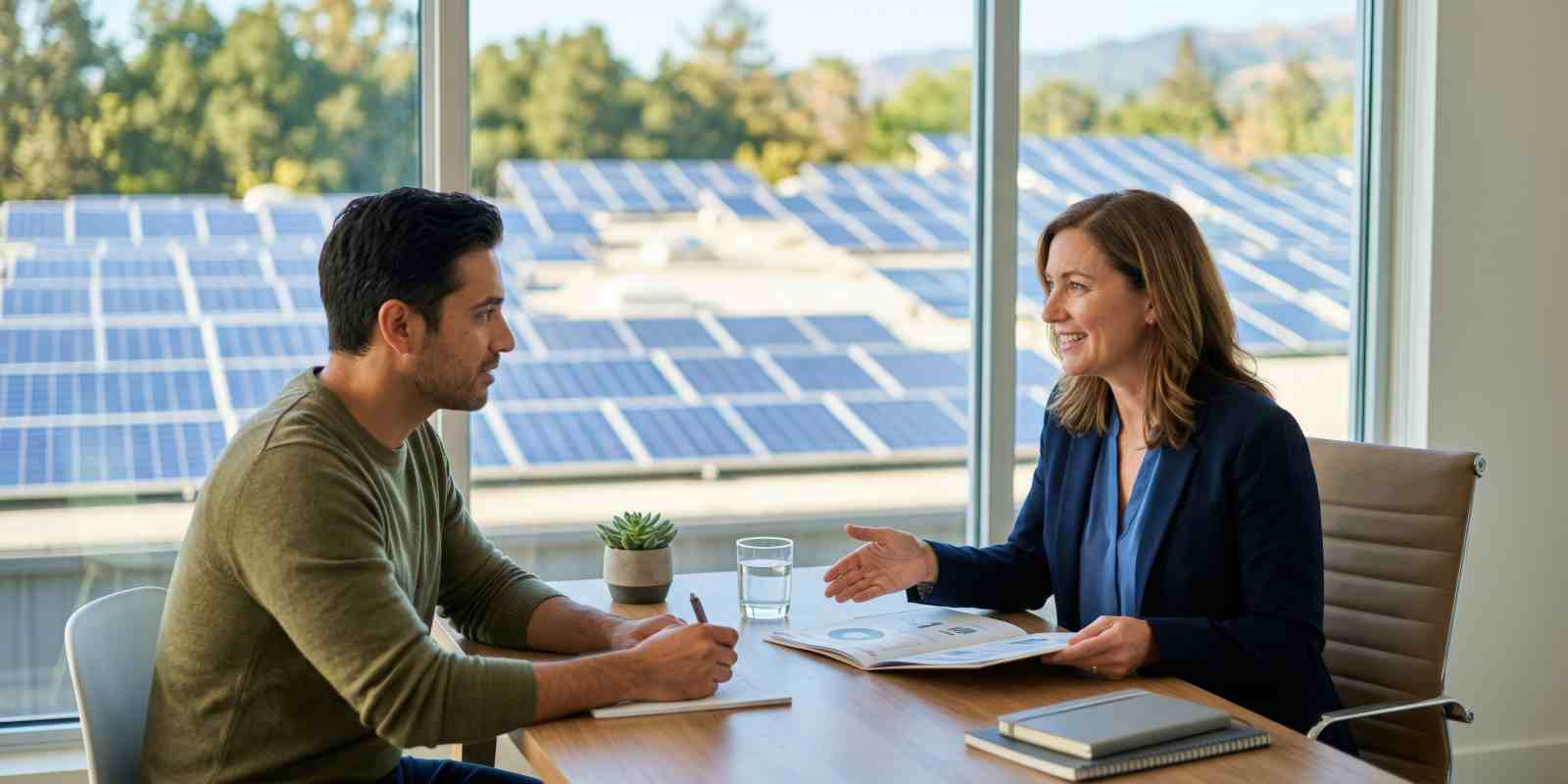
At Energy Select, our team of installers helps homeowners determine the best financing option for their solar panel investment, including a solar lease, a cash purchase, or a solar loan. Our goal is to give homeowners the information they need to make informed decisions about their situation. We offer detailed on-site assessments and same-day pricing quotes on solar to make sure you’re never left in the dark about your energy future.
Contact our team today to learn more about solar financing in Maryland and the best options for your situation.