

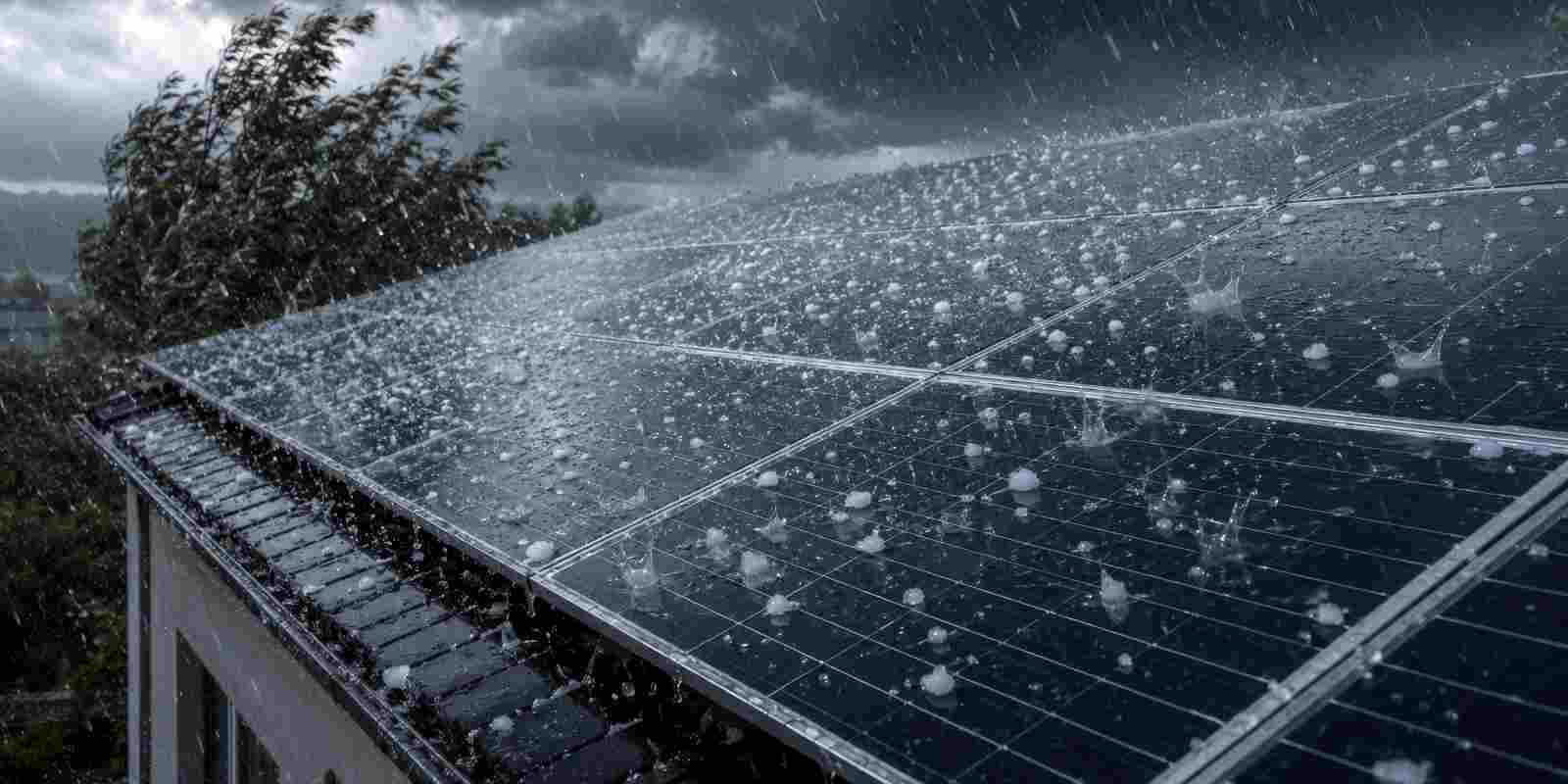
Solar panels withstand harsh conditions such as hailstorms and high winds. Manufacturers test their equipment against standardized impact and mechanical loads before panels reach residential rooftops.
However, hail damage to solar panels and wind-related failures remain possible during extreme storms. Understanding those limits helps Maryland homeowners protect their investment and recognize when professional attention is necessary.
How Solar Panels Withstand Hail
Most residential solar panels use tempered glass that resists impacts considerably better than ordinary window glass. Manufacturers evaluate hail resistance under International Electrotechnical Commission (IEC) 61215, a qualification standard for photovoltaic modules.
The IEC 61215 MQT 17 baseline hail test subjects panels to 11 impacts using ice balls approximately 25 millimeters in diameter traveling at 23 meters per second, or roughly 51 mph. Testing examines whether the impacts compromise the module’s safety or electrical performance.
Real-world evidence demonstrates how well properly manufactured panels can perform. During a May 2017 hailstorm at the National Renewable Energy Laboratory (NREL) in Golden, Colorado, just one of more than 3,000 solar panels was damaged.
However, larger hailstones can exceed standard testing conditions. Kiwa PVEL conducts enhanced hail stress testing using ice balls up to 55 millimeters in diameter, revealing differences in how modules withstand stronger impacts.
Homeowners concerned about solar panel hail damage can review the manufacturer’s impact ratings and warranty terms before installation. Hail-resistant equipment reduces exposure to damage, although no panel is guaranteed to survive every storm.
Solar Panels in High Winds Depend on Secure Mounting
Strong winds exert pressure on solar panels and create uplift forces that attempt to pull equipment away from the roof. Mounting rails, clamps, and structural attachments must resist those forces without loosening or separating.
IEC 61215 MQT 16 evaluates mechanical strength using controlled pressure loads. The standard includes a baseline 2,400-pascal test load associated with wind uplift and other mechanical stresses.
Actual wind resistance depends on the panel’s approved mounting configuration and the engineering of the completed installation. Research published through RMI’s Solar Under Storm initiative identifies mounting hardware and attachment failures as important causes of storm-related solar damage.
Even small differences in installation methods can change how the finished system responds to wind pressure:
- Roof attachments. Fasteners must connect securely to appropriate structural members and meet the mounting system’s engineering requirements.
- Panel clamps. Proper clamp placement and tightening help prevent modules from shifting under wind pressure.
- Roof location. Panels near roof edges and corners can experience stronger uplift forces, requiring particular attention during system design.
Solar panel wind damage may involve loose racking or displaced modules even when the glass remains intact. Proper installation protects the entire assembly, including the roof attachments supporting it.
Warning Signs of Solar Panel Storm Damage
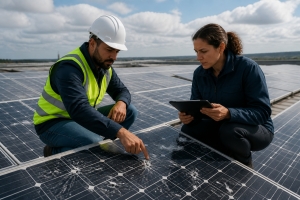
Storm damage on solar panels isn’t always visible from the ground. Hail impacts and wind-driven debris can produce microcracks within photovoltaic cells without breaking the outer glass. Microcracks may interrupt electrical pathways and reduce energy production. Severe impacts can also damage junction boxes, wiring, or connectors.
After a storm, homeowners may find:
- Cracked glass, bent frames, or panels that appear displaced.
- Loose mounting components or debris trapped beneath the array.
- Unexpected drops in electricity production compared with similar weather conditions.
- Inverter fault notifications or monitoring alerts indicating abnormal system operation.
A temporary production decrease during cloudy weather is normal. Persistent underperformance after conditions improve deserves closer investigation.
Steps to Take After Severe Weather
Start with a visual assessment from the ground. Avoid climbing onto the roof, touching exposed wiring, or attempting to reposition damaged panels. Solar equipment can remain electrically energized whenever sunlight reaches the modules.
Review your monitoring application for faults or unexplained production losses. Photograph visible damage from a safe location and record the storm date. Then, schedule a professional solar panel inspection after a storm if you notice cracked glass, shifted equipment, electrical warnings, or persistent performance problems. Technicians can examine mounting hardware, wiring, and module condition, then determine whether further electrical testing is warranted.
In many homeowners insurance arrangements, permanently installed solar panels are treated as components of the residence, a practice outlined in research on how insurance policies address solar panels, but deductibles, exclusions, and limits still require attention. Detached arrays and leased systems may require different arrangements. Contact your insurer before authorizing repairs that could affect a claim, except where immediate action is necessary for safety.
Protect Your Solar Panels With Energy Select
Energy Select serves homeowners throughout Southern and Western Maryland with residential solar installation and ongoing system support. Proper mounting specifications, equipment selection, and professional maintenance help address the weather-related vulnerabilities homeowners should understand before investing.
Following a damaging storm, Energy Select’s operations and maintenance services provide a starting point for discussing system performance concerns and potential inspection needs. Get an instant estimate to discuss your system, local weather exposure, and available service options.