


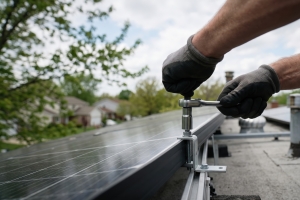
Replacing a roof that already carries a solar array means bringing in two trades instead of one. This article walks through how removing solar panels for roof replacement actually works, what reinstallation involves, and what protects your system’s performance and warranty along the way.
Why the Panels Have to Come Off First
A roofer can’t strip a deck down to bare wood while an array is still fastened to it. In many cases, every mounting point on that array runs a lag bolt through the shingles and into the rafters below, and each of those points needs a fresh flashing seal once the old roofing comes off. There’s a second reason the panels come off first. A roofer working around an array can’t get a full look at the decking underneath for rot or soft spots, and deck damage is often exactly why the roof needed replacing.
Working around the array instead of removing it might sound like a shortcut. Most roofing manufacturers won’t honor coverage on a roof they never got a clean look at during installation, and skipped inspection points tend to become the leaks nobody catches until the next storm. Sequencing the solar panel removal and reinstallation correctly plays a role in both the roof warranty and the solar warranty.
How a Qualified Team Handles the Detach and Reset
Disconnecting and Removing the Array
The crew begins by powering the system down and pulling the connections at the combiner box, or at each micro-inverter, depending on how the original install was wired. Before a single panel comes off, the crew tags and photographs it so it returns to its exact spot and angle, not an approximate one. Once every panel is off, the rails, mounting feet, and old flashing come off too, down to the bare deck and ready for the roofer to start fresh.
Reinstalling Once the New Roof Is Complete
With the new roofing material in place, the crew remounts using new flashing at every penetration, never the old flashing pulled off during removal. Lag bolts typically bite into a rafter, not just the decking above it, because decking alone won’t hold a panel array against wind uplift. Before packing up, the crew retests the system to confirm it’s producing at full output, not just powered on.
Coordinating Timing Between the Roofing and Solar Crews
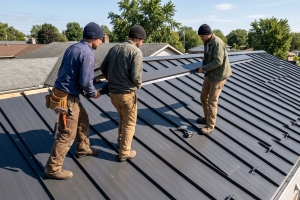
Getting the roofing and solar timelines to line up takes more than picking two dates. Too many days between panel removal and a finished roof leaves bare decking sitting exposed to rain and wind. Moving too fast in the other direction, putting panels back before new roofing material has had time to cure, can force a redo on flashing that never got the chance to seal properly. A coordinator on your solar provider’s side should be talking directly to your roofing contractor about actual job progress, not working off a placeholder timeline built before either crew has seen the roof.
Protecting Your Solar Warranty During a Roof Replacement
Who physically handles a panel can determine whether its warranty still applies afterward. REC Group ties its ProTrust Warranty directly to installer certification. Coverage only applies when an REC-certified technician does the work and registers it with the company. Terms like that vary by manufacturer, so it’s worth checking your own equipment’s documentation before anyone besides a certified solar technician removes or remounts a panel.
The roof side works the same way. Roofing manufacturers commonly deny a warranty claim when someone other than a licensed roofer handled the flashing work. Once the array is reconnected, comparing new production numbers against the readings from before the roof work is the simplest way to confirm nothing shifted during the move. Homeowners can track their system’s performance to run that comparison.
What Drives Solar Removal Cost
Three factors drive what a solar removal and reinstall job costs: system size, racking type, and how many roof penetrations need new flashing.
System size carries the biggest share of the labor bill. Pulling, storing, and remounting a 24-panel residential array takes a full crew day or more, while an eight-panel system on a garage roof can move faster simply because there’s less to handle and less space needed to store it during the roof work.
Racking type changes both the timeline and the price tag. Older rail-based mounting systems have more individual lag points to disconnect than the newer rail-less designs installers use now, and each extra attachment point adds labor minutes that show up in the final number.
Roof penetrations carry their own cost regardless of racking style. Every one needs fresh flashing during reinstall, and older installs often have more penetration points than a system built with today’s mounting hardware.
Getting a project-specific quote beats working from a general number, since panel count, roof pitch, and mounting hardware differ from one home to the next. An estimate built from your actual roof plan and panel count will hold up better than a per-panel average pulled from somewhere else.
Schedule Your Solar Panel Removal and Reinstallation

Energy Select works directly with your roofing contractor to plan the removal and reinstallation around the actual construction schedule, not a guess. The team manages disconnection, remounting, and the warranty paperwork on both ends, and stays reachable through the Customer Relationship Manager once the array is back online. Request a quote for a project timeline built around your roof and your system.
We Know Energy, and we know how to keep it running through a roof replacement.